Deep Dive Node JS
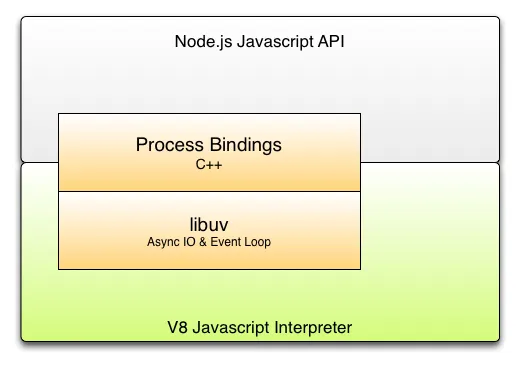
What really happens under the hood when you run a Node.js application? What makes it an “asynchronous, event-driven JavaScript runtime”?
Let’s dissect the core internals: Google’s V8 engine, internal bindings, and LibUV.
1. The V8 Engine
V8 is Google’s open-source JavaScript compiler written in C++. It compiles JavaScript directly to native machine code, manages the call stack, allocates heap memory, and handles garbage collection.
V8 executes JavaScript in a single thread, following an event loop sequence. However, V8 alone provides no file system access, network socket primitives, or operating system bindings.
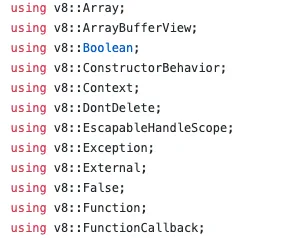
2. process.binding() — The C++ Bridge
Node.js is approximately 30% JavaScript and 70% C++.
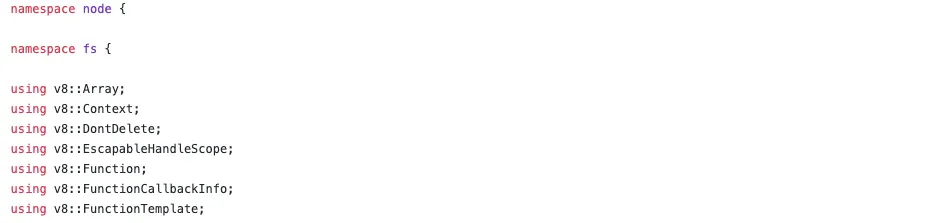
process.binding() (and internal C++ bindings in modern Node.js) acts as the bridge connecting high-level JavaScript APIs (like fs, crypto, net) to native C++ implementations.
When you call fs.readFile() in JavaScript, execution traverses down into src/node_file.cc to communicate directly with OS kernel system calls.
3. LibUV & The Event Loop
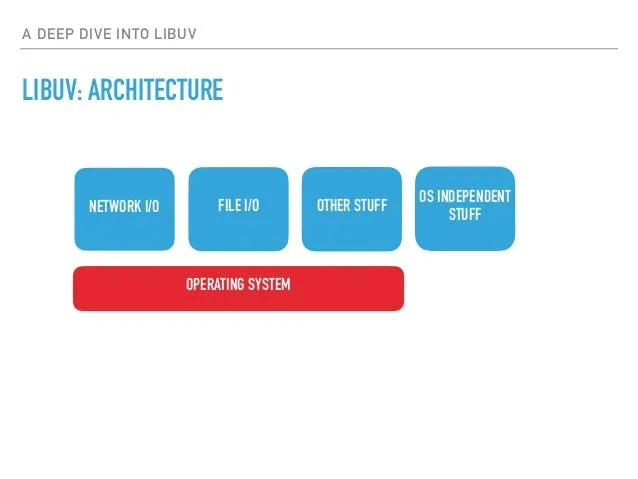
LibUV is the multi-platform C library providing asynchronous I/O, event notification, and thread pooling to Node.js.
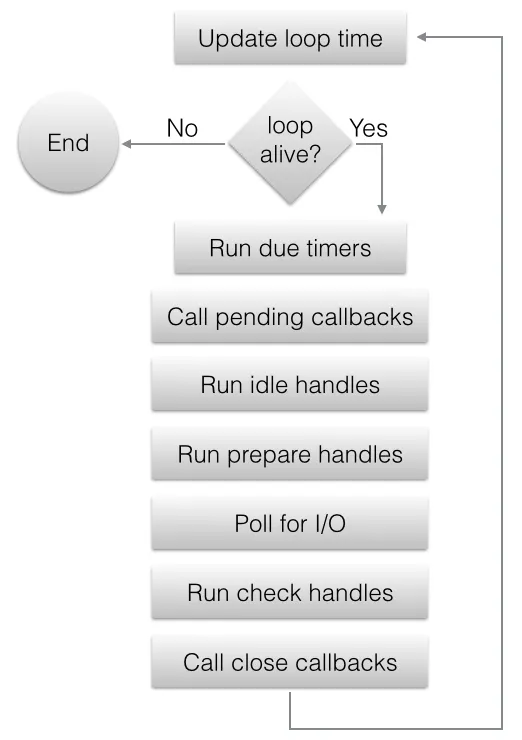
The Thread Pool
While the JavaScript runtime executes in a single thread, blocking operations (such as file I/O, DNS lookups, and intensive cryptographic routines) are delegated to the LibUV thread pool (defaulting to 4 threads).
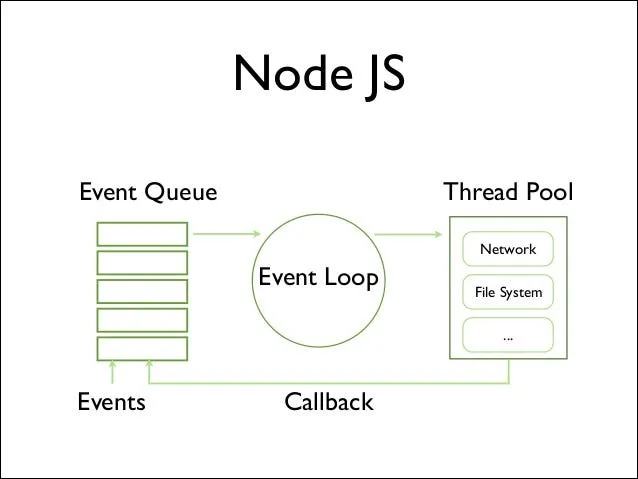
Once the OS or background worker completes the task, LibUV places the callback onto the event loop poll queue for JavaScript execution.
Summary
- Node.js is single-threaded in JavaScript execution, but multi-threaded under the hood through LibUV and the OS kernel.
- The event loop only exits when all timers, pending OS tasks, and thread pool workers have completed.
- Understanding the boundary between JS abstractions and C++ threads prevents event loop starvation in production.